Under current law, open-end credit finance charges are determined by the agreement of the involved parties. The bill establishes an annual maximum of 36% for open-end credit. The bill also limits monthly maintenance fees and other fees on open-end consumer credit.

Currently, closed-end credit finance charges are generally calculated at a maximum annual rate of 36% for the portion of credit under $860 and 21% for a credit over $860. The bill establishes an annual maximum of 36% for closed-end credit. Under current law, a cash advance loan less than $500 cannot be assessed more than 15% per week or per month of the amount of the cash advance, which translates to a higher annual percentage rate. The bill caps that rate at 36% annually, along with other charges described in the bill. The bill replaces the payday loan section by establishing a small loan that would not exceed $2,500 with a minimum term of three calendar months and a maximum term of 24 months. The bill also adds new language for loan disclosure information and provide for more restrictions relating to the new small closed-end loans.

How To Get A Small Payday Loan A lender would be allowed to seek a personal money judgment against the borrower for any amounts owed under the loan agreement if the borrower impairs the lender's security interest in certain instances. The bill requires annual reports to be filed with the State Bank commissioner. Payday loans are very short-term loans with high interest rates. Typically under $1,000, payday loans essentially provide people in need of quick cash with an advance on their paycheck. Although it costs borrowers quite a bit to take out a payday loan – due to the high interest rates and fees involved – these loans are often a last resort for those in dire financial straits.

While this lending practice is sometimes called predatory, payday loans also help people through a tough time. Despite the negative associations with being a payday lender, people always seem to need this type of service. Payday lenders require you to furnish a copy of your driver's license, and information about your employment and bank accounts.

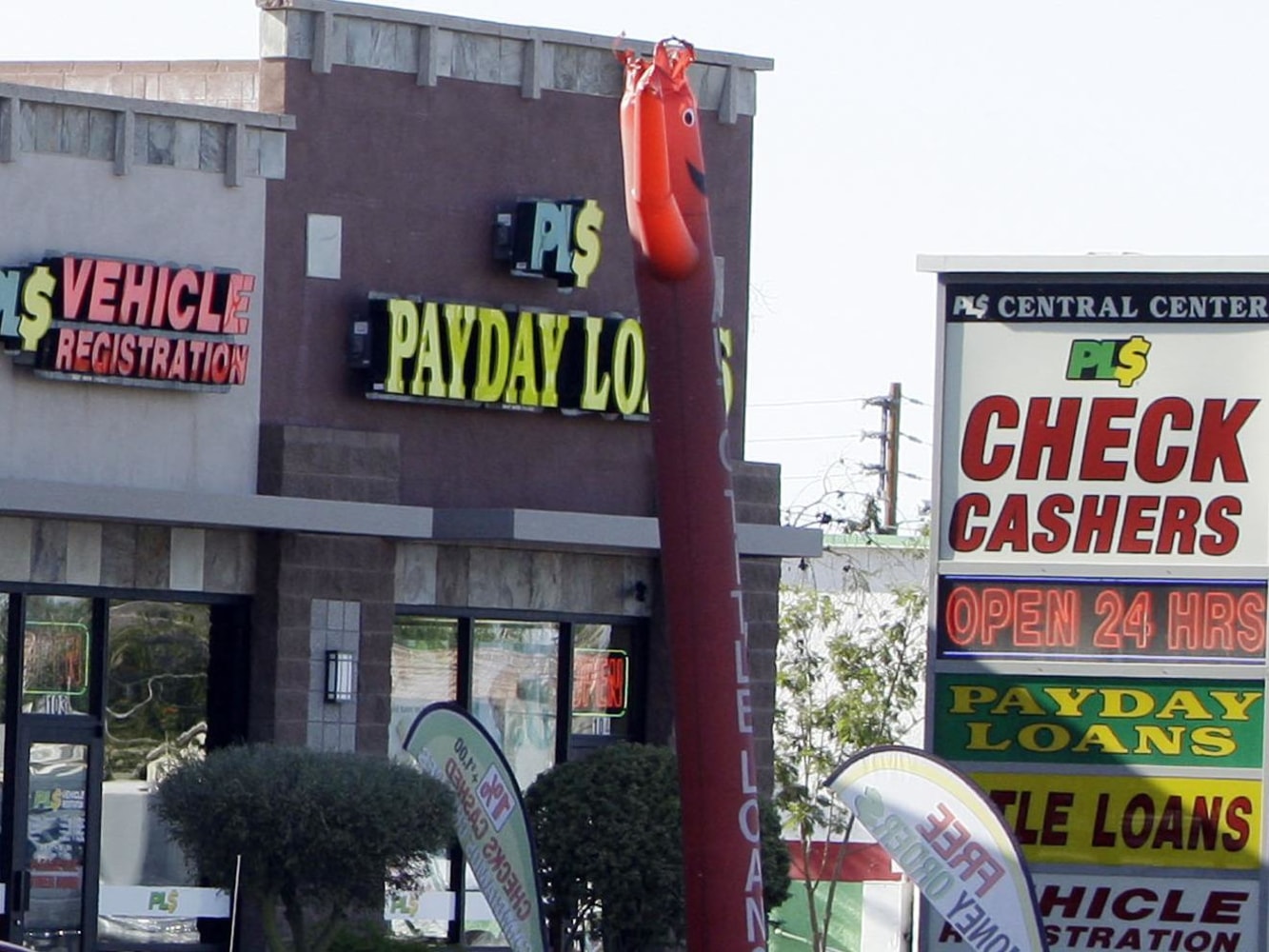
The lenders do not perform a credit check, and you write them a post-dated check for the amount you want to borrow plus a fee. The fee is usually a "borrowing" fee and an account set-up fee. The lenders will then deposit your check after your payday if you have not already paid off the loan. If your bank account cannot cover the amount of the loan, you will then owe the original loan plus added interest. If you know you cannot pay off the loan in time, you can pay the borrowing fees in order to renew the loan. The annual percentage rate for a payday loan often starts over 400 percent!

This practice creates a cycle of consumer refinancing and continuous debt. Requires the division of financial institutions to conduct an analysis of the regulation of payday lenders and deferred deposit agreements and report to the legislature. It is true that restrictive laws could have many unintended negative consequences on businesses and consumers. It seems that strict legislation could lead to reduced consumer welfare instead of preventing debt, especially for low-income borrowers. Not only is borrowing from loan sharks illegal, borrowers and their family/friends are also vulnerable to harassment, threats and violence.
This is a problem that is often reported in the news in Singapore, where I live. The Singapore government is very strict in cracking down on loan sharks and other unlicensed moneylenders. Payday loans are personal loans, so payday lenders got around these laws by acting as a brokers or middlemen between lenders and customers. They can't do it directly because they'll violate those usury laws. So, they become a sort of middleman between the customer and another lender, rather than servicing the customer directly.

They take out a $100,000 loan from another lender and then use that money to extend multiple smaller loans to their loan applicants at higher rates and additional fees. This way, they can be considered loan brokers, as they are facilitating a loan from one party to another. They then charge high brokerage fees, normally of 120% or more. Because of the high interest rates, payday loans are the most expensive way to borrow money. Some states have laws regulating how much payday lenders can lend and how much they can charge for loans, while other states, like New York, ban the practice of payday lending altogether. In those states in which the practice is banned, lenders often get around the regulations by partnering with banks in other states.

Do you want to start a payday loan business and want to know the cost? If YES, here is a cost breakdown to open a payday loan firm and the profit margin/ROI. Payday loan firms are businesses that offer payday loans, installment loans and other related financial services. They may also cash checks, drafts or money orders for the general public. It is important to state that banks and firms that operate exclusively online are not part of the Payday Loan and Check Cashing Services business.
Prior to 2009 regulation of consumer credit was primarily conducted by the states and territories. Some states such as New South Wales and Queensland legislated effective annual interest rate caps of 48%. In 2008 the Australian states and territories referred powers of consumer credit to the Commonwealth. In 2009 the National Consumer Credit Protection Act was introduced, which initially treated payday lenders no differently from all other lenders. In 2013 Parliament tightened regulation on the payday lending further introducing the Consumer Credit and Corporations Legislation Amendment Act which imposed an effective APR cap of 48% for all consumer credit contracts . Payday lenders are still required to comply with Responsible lending obligations applying to all creditors.
Unlike other jurisdictions Australian payday lenders providing SACC or MACC products are not required to display their fees as an effective annual interest rate percentage. Payday lending services extend small amounts of uncollateralized credit to high-risk borrowers, and provide loans to poor households when other financial institutions will not. First, the history of borrowers turning to illegal or dangerous sources of credit seems to have little basis in fact according to Robert Mayer's 2012 "Loan Sharks, Interest-Rate Caps, and Deregulation". Outside of specific contexts, interest rates caps had the effect of allowing small loans in most areas without an increase of "loan sharking". In addition, there appears to be no evidence of unmet demand for small dollar credit in states which prohibit or strictly limit payday lending. In the more recent innovation of online payday loans, consumers complete the loan application online .

The funds are then transferred by direct deposit to the borrower's account, and the loan repayment and/or the finance charge is electronically withdrawn on the borrower's next payday. This bill modifies provisions applicable to delayed deposit services. The bill limits the annual percentage rate applicable to a delayed deposit services transaction to 36%, as computed pursuant to the federal Truth in Lending Act. The licensee may not initiate debt collection, civil court proceedings, or arbitration to collect on the unpaid checks during the term of the extended repayment plan agreement. A licensee need only enter into one extended repayment plan agreement with a maker of multiple checks in a 12-month period.
A licensee cannot charge a fee, interest charge, or other charge as a result of entering into an extended repayment plan agreement. During the duration of the agreement, the obligations that the maker owes on the unpaid checks are not delinquent and the licensee cannot charge penalties for a delinquent obligation. The licensee may not initiate debt collection, civil court proceedings, or arbitration to collect on any unpaid checks during the term of the extended repayment plan agreement. A licensee need only enter into one extended repayment plan agreement with a maker in a 12-month period. During the duration of the agreement, the obligations that the maker owes on any unpaid checks are not delinquent and the licensee cannot charge penalties for a delinquent obligation. The bill requires the extended repayment plan agreement to be in writing, signed by the maker and the licensee, and contain the schedule for payment of the total unpaid check obligations.
The schedule must allow the maker to pay the checks in at least four substantially equal installments. The bill requires the licensee to return any postdated checks that the maker has given to the licensee for the original transactions. The licensee may then either require the maker to provide a new check for the balance on the unpaid checks or provide multiple checks for each scheduled payment under the agreement. A violation of the bill may result in an administrative fine of not more than $5,000 for each violation and the cost of investigation. In provisions concerning service of certain notices and orders, allows service by email to the email address of record.

Provides that service to an email address of record is deemed complete when sent. Provides that service by certified mail shall be deemed completed when the notice is deposited in the U.S. mail. Defines the term "email address of record." Makes other changes. So, when you are drafting your marketing plans and strategies for your payday loan and check cashing services firm, make sure that you create a compelling personal and company profile. This will help boost your chances in the market place when sourcing for clients.

In October 2017, the Consumer Financial Protection Bureau issued new rules about payday loans. Under these rules, lenders are required to assess whether or not a borrower will be able to repay the loan while still meeting basic living expenses and other financial obligations. The rules also limit the number of loans one borrower can make in quick succession to three. If you plan to start a payday loan business, make sure to stay abreast of rules that govern the industry. A payday loan business comes with a decent share of regulations and legal requirements. Be sure you understand what these are before getting started.
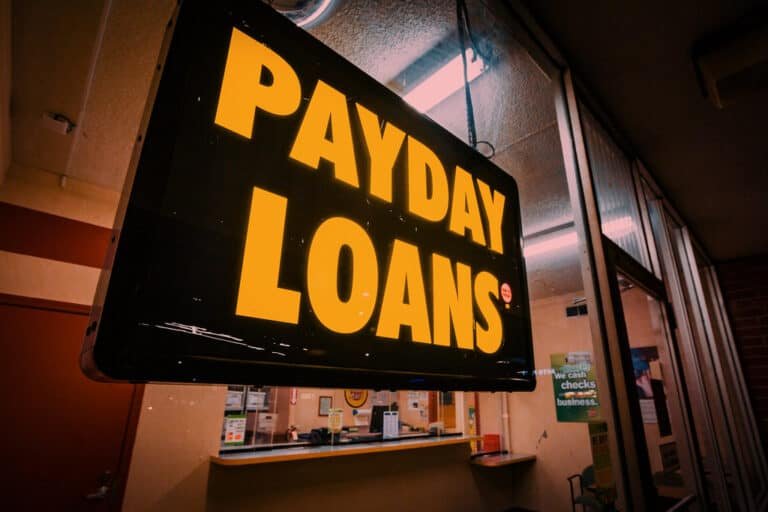
In fact, each state has its own regulations for payday loans. For example, in California, payday lenders can only loan up to $300; in Delaware, a lender can provide a loan up to $1,000. Whether a payday loan is based on a personal check held for future deposit or on access to the borrower's bank account, this type of loan is short-term. Borrowers are required to pay loans and finance charges in one lump sum on their next payday when the lender holds the checks.

The term "payday" in payday loan refers to when a borrower writes a postdated check to the lender for the payday salary, but receives part of that payday sum in immediate cash from the lender. However, in common parlance, the concept also applies regardless of whether repayment of loans is linked to a borrower's payday. The loans are also sometimes referred to as "cash advances", though that term can also refer to cash provided against a prearranged line of credit such as a credit card. Legislation regarding payday loans varies widely between different countries, and in federal systems, between different states or provinces. With such a high payback on their loans, payday lenders are willing to lend to virtually anyone with a checking account and some kind of regular income.

This "open door" policy is described by the industry as "serving people who have been denied access to credit by traditional lenders." But payday lenders are actually providing access to debt, not credit. And as bankruptcy and credit card industry statistics confirm, American consumers are awash in more debt than they can handle. For people living paycheck to paycheck, a 400% payday loan is not the answer. Putting restrictions on the payday loan industry may not reduce the demand for such loans. It is important for government agencies to take a closer examination of the socio-economic issues that have resulted in their cash-strapped, paycheck-to-paycheck situation.

More extensive safety-nets, employment schemes, financial aid schemes and financial support structures could be employed to lessen the financial crunch that low-income groups face. Subsidizing big-ticket purchases such as property, cars, and college education is also a possible consideration to reduce the demand for fast loans. All of these costs are what allow a payday lender to qualify as a loan broker between the third-party lender and the customer.
Right off the bat, this payday loan company has incurred 30% in recurring overhead expenses before it can even start lending. What kind of effect do you think this high cost will have on their payday lending? It dramatically raises the cost of a loan for the consumer, because the payday lenders then tack on the huge brokerage fees to compensate for the costs of becoming a broker. Most payday loans that are offered have a repayment time of a week to a month. If you cannot repay the loan on time, the lender has the right to withdraw money from your bank account directly, potentially costing you overdraft charges as well.

The terms are similar to those of a payday loan; a customer receives a predetermined cash credit available for immediate withdrawal. The amount is deducted, along with a fee, usually about 10 percent of the amount borrowed, when the next direct deposit is posted to the customer's account. After the programs attracted regulatory attention, Wells Fargo called its fee "voluntary" and offered to waive it for any reason. Wells Fargo currently offers its version of a payday loan, called "Direct Deposit Advance", which charges 120% APR.

Similarly, the BBC reported in 2010 that controversial TxtLoan charges 10% for seven-days advance which is available for approved customers instantly over a text message. Research for the Illinois Department of Financial and Professional Regulation found that a majority of Illinois payday loan borrowers earn $30,000 or less per year. Texas' Office of the Consumer Credit Commissioner collected data on 2012 payday loan usage, and found that refinances accounted for $2.01 billion in loan volume, compared with $1.08 billion in initial loan volume. The report did not include information about annual indebtedness.
A letter to the editor from an industry expert argued that other studies have found that consumers fare better when payday loans are available to them. Pew's reports have focused on how payday lending can be improved, but have not assessed whether consumers fare better with or without access to high-interest loans. Pew's demographic analysis was based on a random-digit-dialing survey of 33,576 people, including 1,855 payday loan borrowers. But for the vast majority of payday borrowers -- the borrowers who take out five or more payday loans per year and account for 91% of all payday loans -- payday lending functions as chronic debt, instead of helpful credit. This is because payday renewal fees are charged repeatedly, while late fees and bounced check charges are one-time fees and do not vary by loan amount.

The payday loan business model is actually much more complicated than I ever realized. It's not just one company lending its money to a customer for those high interest rates and fees. In fact, that model is essentially illegal in many states due to usury laws, which prohibit personal loans from having usuriously high interest rates (in Texas, the limit is 10%). If your credit score is not below 580, you'll be able to apply for a credit card for business. In addition to that, they also offer 12 months zero percent intro APR period.
But you'll have to make sure that you're making the full monthly payment on time. This is one of the best options available in the market if you need cash flow or some credit. Another penalty consumers often incur from payday loans is nonsufficient funds (bounced-check) charges from you bank. If you don't have the money in your account when the payday lender tries to cash the post-dated check you wrote or takes the money out by direct deposit, most banks charge a $25-$35 penalty. Other options include borrowing the money needed to repay the loan from friends or family, or freeing funds by postponing payment on a less pressing debt. If you have a credit card, consider other options like taking a cash advance to make the payment.

You could write a check on an account with overdraft protection. The overdraft might result in a bank charge, but if you can raise the money to cover the bank charge, it might be preferable to tangling with collection-minded payday lender. Firms that operate in the Payday Loan and Check Cashing Services industry offer payday loans, installment loans and other related financial services. It is important to categorically state that banks and firms that operate exclusively online are not part of the Payday Loan and Check Cashing Services industry. The industry has loads of small business operators servicing a wide range of clients.
On the other hand, the shorter repayment term means these loans will be easier to qualify for and quicker to fund. So, while short-term loans will be more expensive than traditional term loans, they'll still be more affordable than most merchant cash advance options. Plus, their quick application and underwriting processes will make them an ideal alternative to business payday loans. Payday loans are short-term, small-sum, high-rate, unsecured personal loans. Your checking account is the method of repayment of the amount borrowed and any extra fees.

These types of loans may also be called cash advance loans, check advance loans, post-dated check loans, or deferred deposit loans. The likelihood that a family will use a payday loan increases if they are unbanked or underbanked, or lack access to a traditional deposit bank account. In an American context the families who will use a payday loan are disproportionately either of black or Hispanic descent, recent immigrants, and/or under-educated. These individuals are least able to secure normal, lower-interest-rate forms of credit. Since payday lending operations charge higher interest-rates than traditional banks, they have the effect of depleting the assets of low-income communities.

The Insight Center, a consumer advocacy group, reported in 2013 that payday lending cost U.S communities $774 million a year. In the traditional retail model, borrowers visit a payday lending store and secure a small cash loan, with payment due in full at the borrower's next paycheck. The borrower writes a postdated check to the lender in the full amount of the loan plus fees.